A lot of people think a warm house means the whole AC is dead and costly. In practice, many cooling problems start small. A weak part, a clogged drain line, or a dirty coil can cause them. Fixed early, they often stay small.
Dayarrival Heating & Air is a referral service. We do not repair air conditioners. We connect homeowners in Seattle and the Seattle area with independent local providers who do the work. This page is written for first-timers. It explains what to check, what a visit looks like, what common repairs cost, and what to ask. Less searching means you can talk to a provider while the problem is still easy to handle.
Your AC Is Not Cooling. Start Here.
Myth: a warm house means a huge repair bill. Fact: many cooling problems are small at first. Reaching a provider early can keep them that way. This page walks you through what to check, what to expect, and what to ask.
What Emergency AC Repair Really Means
A lot of people think they must wait for a full breakdown before asking for help. You don't. Emergency AC repair usually means the system quit, leaks water, smells burnt, or keeps tripping the breaker. Many providers can respond quickly, but availability varies. Request a callback to check provider availability.
Five Quick Checks Before You Reach Out
- Make sure the thermostat is set to cool and the target is below the room temperature.
- Replace thermostat batteries if the screen is dim or blank.
- Look at the breaker panel for a tripped switch.
- Check the air filter. A clogged one can choke airflow.
- Look at the outdoor unit. Clear leaves, moss, and wind-blown debris.
If a breaker trips again right after you reset it, stop. Do not keep flipping it.
When to Switch Everything Off
Myth: keep it running and it will sort itself out. Fact: running a damaged system can add damage. Turn it off at the thermostat if you see ice on the lines, water pooling by the indoor unit, or hear grinding. If you smell burning or see smoke, shut off the breaker and leave the area. Call emergency services if you feel unsafe.
Get an Estimate
Common Signs Your AC Needs Repair
- Air from the vents feels warm or weak.
- The system runs a long time but the house stays muggy.
- You hear buzzing, clicking, or squealing.
- The outdoor fan does not spin.
- Your power bill creeps up for no clear reason.
- Water drips near the indoor unit.
One sign alone may be minor. Two or three together are a good reason to ask a provider to look.
Myth: Mild Weather Means the AC Never Breaks
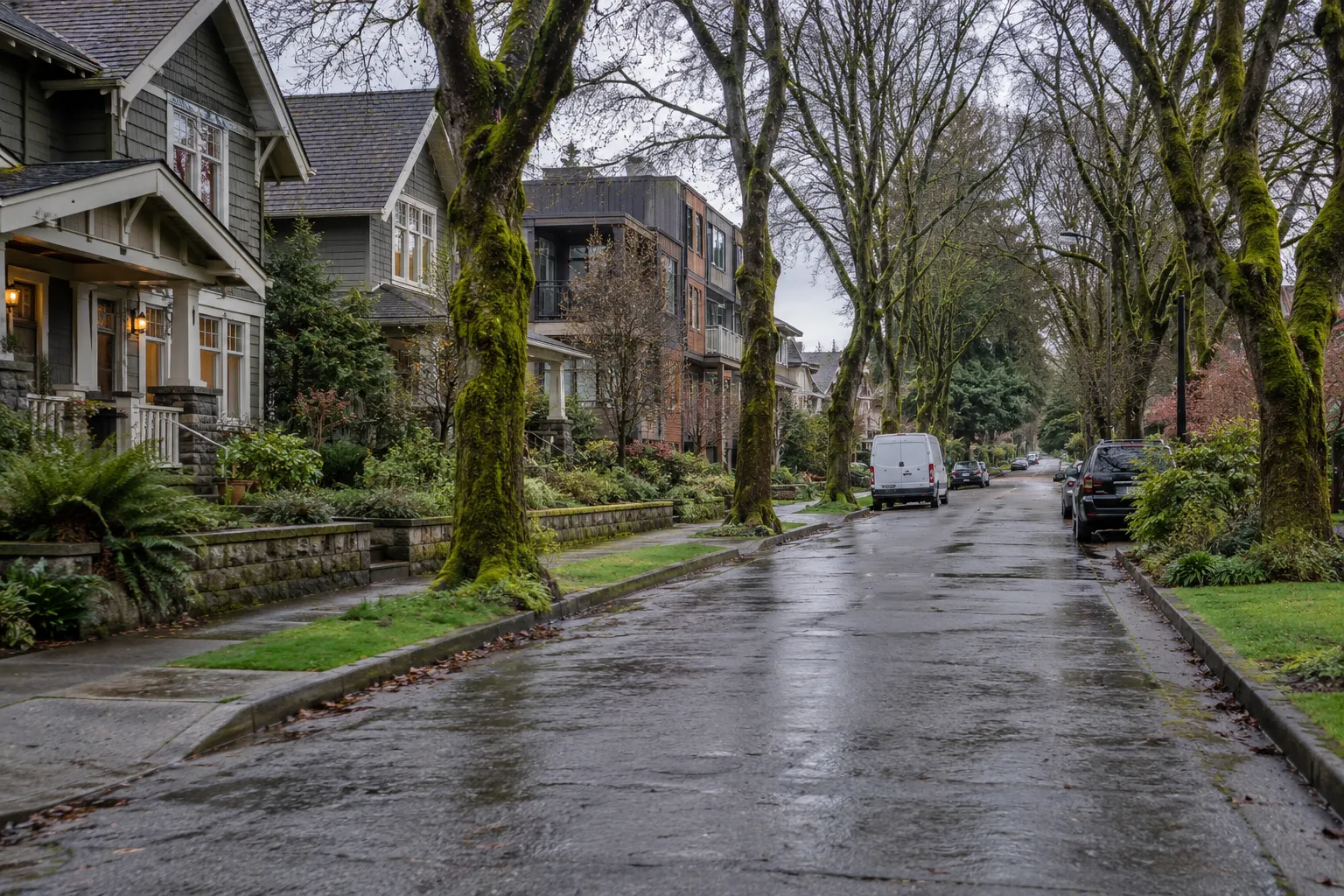
In a mild, wet climate, an AC may sit idle for months. Damp air, moss, and windstorm debris still reach it. Then the first warm spell arrives and a worn part gives out. Idle does not mean safe. A quick check before the warm season can catch trouble early.
Myth: A New Filter Fixes Everything
A clean filter helps. It is the first thing to try. But it will not fix a failed capacitor, a refrigerant leak, or a dead fan motor. If the filter is fresh and the air is still warm, the cause is somewhere else.
Crawl Spaces, Craftsman Homes, and Townhomes
Many wood-frame homes have ducts in crawl spaces. Damp can wear down duct wrap and cause leaks. Older craftsman houses may have tight spaces and older wiring. Newer townhomes often have compact units on small pads. A provider will tell you what your setup needs.
What Happens During an AC Repair Visit
First visits are simple. Here is the usual flow:
- The provider asks what you have noticed.
- They check the thermostat, filter, and airflow.
- They test the outdoor unit, electrical parts, and refrigerant pressure.
- They explain the cause and your options.
- You decide before any work begins.
Ask for a written quote when the fix is more than a quick part swap.
Get an Estimate
Common AC Repairs
These are the jobs providers see often:
- Capacitor or contactor replacement
- Outdoor or indoor fan motor repair
- Refrigerant leak repair and recharge
- Drain line clearing
- Thermostat replacement
- Frozen coil cleanup
Capacitors and Contactors
These small electrical parts help the motors start. When one fails, the unit may hum but not run. It is a common, usually modest repair.
Drain Lines and Damp
Cooling pulls water out of the air. If the drain line clogs, water backs up. In damp regions, algae and grime build up easily. A cleared line can stop leaks and shutoffs.
Repair or Replace?
Myth: an older AC must be replaced. Fact: age matters, but it is only one piece. A newer unit with a failed part is usually worth repairing. An older unit with repeated breakdowns or a major failure may not be.
A Simple Rule of Thumb
If the repair quote is a large share of a new system's cost, ask the provider to explain both paths. Ask about efficiency, repair history, and the age of the system. Then compare written quotes.
Should You Fix It Yourself?
Changing a filter and clearing debris are fine. Opening panels, handling wiring, or touching refrigerant is not. These jobs can be unsafe and may need special tools. Leave them to a qualified provider.
Questions to Ask the Provider
- Are you licensed to work in my state?
- What does the diagnostic visit cost, and does it apply to the repair?
- Can I get the repair price in writing first?
- Is there a warranty on parts and labor?
- How soon can you come out?
- Will you explain what failed in plain words?
Where Dayarrival Heating & Air Fits In
Dayarrival Heating & Air does not send its own crew or do any repairs. We connect you with independent providers in Seattle and the Seattle area. You talk to the provider directly, and the provider handles the work and the pricing.
Get an Estimate
Before the Provider Arrives
Clear a path to the indoor and outdoor units. Note when the trouble started and any sounds or smells. Take a photo of the thermostat. Those small details help the provider find the cause faster.
What's Included
Cooling Diagnosis
A provider checks airflow, electrical parts, and refrigerant pressure to find why your home is not cooling.
Part Repairs
Failed capacitors, contactors, and motors can often be replaced during one visit.
Drain and Coil Care
Clogged drain lines and frozen coils are handled so water and ice stop causing trouble.
Clear Written Quotes
Ask for the problem, the fix, and the price in writing before any work starts.
Typical AC Repair Costs
Prices vary by home, brand, part, and how hard the unit is to reach. These are typical U.S. ranges only. Always ask the provider for a written quote before you agree to any repair.
| Repair item | Typical range | Notes |
|---|
| Diagnostic visit | $75 – $200 | Some providers apply it toward the repair |
| Capacitor or contactor | $120 – $450 | Common, small electrical part |
| Drain line clearing | $100 – $350 | Higher if the line is hard to reach |
| Fan motor replacement | $300 – $900 | Depends on indoor or outdoor unit |
| Refrigerant leak repair and recharge | $200 – $1,500 | Varies with leak location and refrigerant type |
| Compressor replacement | $1,500 – $3,500 | Replacing the whole unit may be worth comparing |
Get an Estimate
How It Works
Do Quick Checks
Look at the thermostat, breaker, filter, and outdoor unit. Switch the system off if you see ice, leaks, or smell burning.
Reach a Local Provider
Request a callback or send the request form to talk with an independent provider.
Review the Quote
Ask the provider to explain the cause, the fix, and the price.
Approve the Repair
You decide. The provider handles the work.
Why Call Dayarrival Heating & Air
Less Searching
Skip the endless scrolling. Request a connection to an independent local provider and start the conversation while the problem is still small.
Plain Answers
Myths get cleared up first, so you know what is normal and what needs a look.
First-Timer Friendly
No jargon. You learn what to check, what to ask, and what a visit involves.
Local Providers
Independent providers know damp, mild climates and the homes common in your area.
Other Services